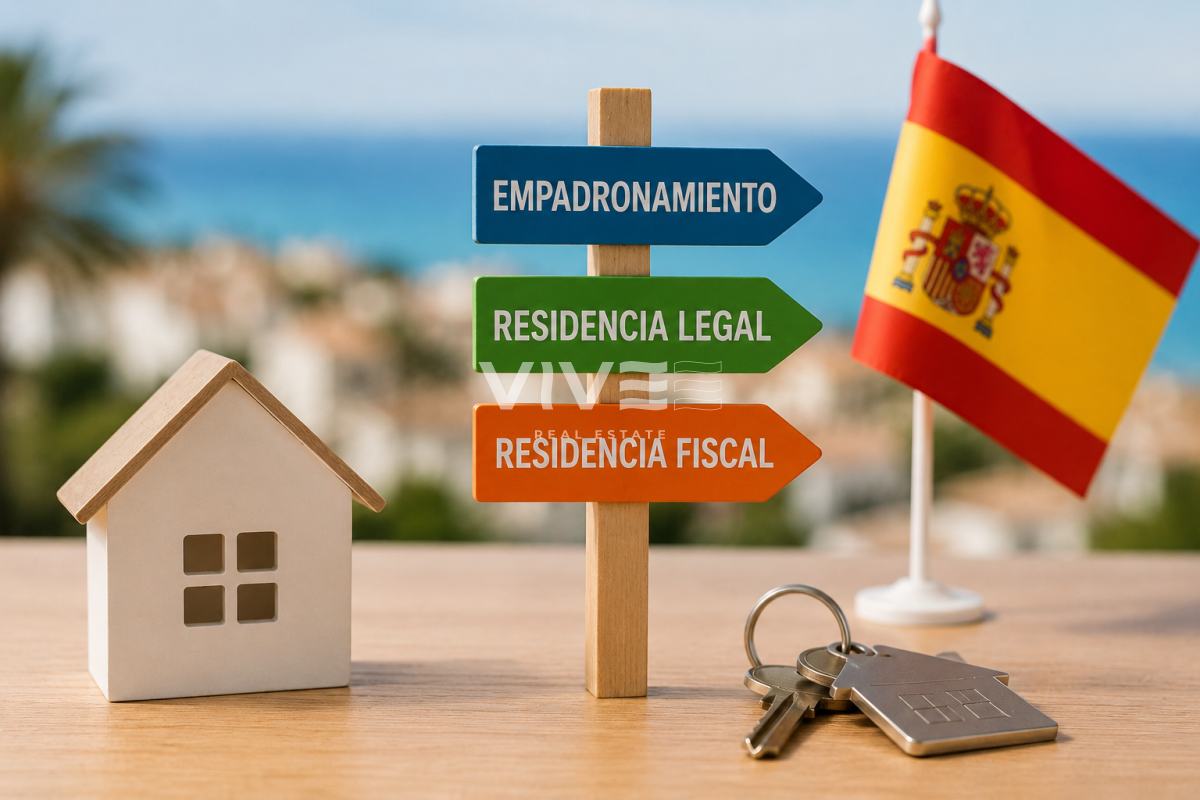
Do You Know the Difference Between Registration, Legal Residency and Tax Residency in Spain?

Many people who buy a property in Spain believe that registering at the local town hall automatically means they have legal residency or tax residency in the country. It is also common to think that having an NIE number or buying a home automatically changes a person’s tax situation in Spain.
The reality is different.
If you are planning to move to Spain, spend long periods on the Costa Blanca or buy a property as a second home, it is important to understand these concepts from the beginning. Otherwise, you may face administrative confusion, tax issues or decisions based on incomplete information.
At Vivee Real Estate, we work every day with international buyers who arrive in Spain with these kinds of questions. That is why we believe it is important to explain these differences in a clear and simple way.
What Is Municipal Registration in Spain?
Municipal registration, known in Spain as “empadronamiento”, is the administrative record that shows in which municipality you live.
When you register, you become part of the local population register managed by the town hall. This process is often necessary to access certain services and procedures in Spain.
For example:
- healthcare services
- schools
- local administrative procedures
- vehicle registration
- some immigration-related procedures
Registering at the town hall does not mean that you automatically become a tax resident in Spain or that you obtain legal residency.
It simply shows that you live or stay in a particular municipality.
Many foreign property owners on the Costa Blanca register locally even if they only spend part of the year in Spain.
What Does Legal Residency in Spain Mean?
Legal residency refers to the right to live legally in Spain.
For European Union citizens, this is often managed through the EU citizen registration certificate. People from outside the European Union may require different residence permits or authorisations depending on their situation.
Legal residency is governed by immigration regulations and does not work the same way for every nationality.
In addition, having legal residency does not automatically mean that you become a tax resident in Spain.
This is where many people get confused.
You may have the legal right to live in Spain while continuing to pay taxes mainly in another country, depending on your personal circumstances.
What Is Tax Residency in Spain?
Tax residency determines in which country you must mainly pay taxes on your income.
In Spain, one of the best-known criteria is the 183-day rule. In general terms, if you spend more than 183 days per year in Spain, you may be considered a tax resident in Spain.
However, this is not the only factor taken into account.
Other aspects may also matter, such as:
- where your economic activity is based
- where your close family lives
- where your main financial interests are located
That is why each situation should be analysed individually.
Tax residency can have important consequences because it affects how and where you declare your income and taxes.
Can You Be Registered but Not Be a Tax Resident in Spain?
Yes.
And this is actually quite common in areas such as Costa Blanca, Torrevieja or Alicante.
For example:
- people with a second home in Spain
- European retirees who spend part of the year in Spain
- foreign owners who stay several months per year
- people who work remotely from Spain during certain periods
In many cases, these people may be registered locally without automatically becoming Spanish tax residents.
Each situation depends on the length of stay and other personal or economic factors.
Common Mistakes When Buying Property in Spain
One of the most common mistakes is believing that buying a property automatically changes a person’s tax status.
Buying a home in Spain does not automatically make someone a tax resident.
People also often confuse:
- an NIE number with legal residency
- municipal registration with tax residency
- legal residency with the obligation to pay taxes in Spain as a resident
For this reason, it is important to understand these concepts before making decisions related to taxes, relocation or long-term stays in Spain.
If you are also thinking about buying a property on the Costa Blanca, you may find useful our guide about buying a house on the Costa Blanca in 2026
What Should You Review Before Moving to Spain or Buying Property?
If you are planning to live in Spain or buy a property on the Costa Blanca, it is advisable to review your situation before completing certain procedures.
Each case may be different depending on:
- your country of origin
- how much time you plan to spend in Spain
- your work situation
- your family circumstances
- how you plan to use the property
At Vivee Real Estate, we help national and international buyers every day who want to purchase property in Spain and better understand the process surrounding property ownership, residency and life on the Costa Blanca.
Making informed decisions from the beginning can help you avoid problems and organise your future plans in Spain with greater confidence.
This article is for informational purposes only and does not replace professional tax or legal advice. Each personal situation may require specific analysis depending on the country of origin, time spent in Spain and the buyer’s personal or financial circumstances.